Future of AI in Vehicle Technology
Artificial intelligence is revolutionizing vehicle technology by impacting multiple facets of the automotive industry. It is enabling advanced driver assistance systems(ADAS) and full autonomy helping vehicles safely navigate public roads through real time data from sensors and cameras. AI is also optimizing electric vehicle(EV) battery management and energy use which enhances sustainability and vehicle efficiency.
Beyond individual cars AI facilitates vehicle to everything(V2X) communication where vehicles interact with traffic signals, road sensors and other vehicles to improve road safety and optimize traffic flow. The rise of AI driven systems is transforming the driving experience, making it safer, more personalized and more efficient.
Additionally AI is improving vehicle manufacturing, predictive maintenance and fleet management reducing costs and increasing reliability. As these technologies mature they promise significant advancements in safety, efficiency, sustainability and user experience across the entire transportation ecosystem. This ongoing transformation is set to redefine how society moves and interacts with vehicles in the future.
The Rise of AI in the Automotive Sector
Artificial intelligence is central to modern intelligent transportation systems driving a new era of connected and automated vehicles. By utilizing machine learning, deep learning and computer vision vehicles can perceive their surroundings with high accuracy and make split second decisions that enhance safety and efficiency.
These AI capabilities also enable seamless interaction with passengers offering personalized experiences through advanced voice assistants and adaptive in car systems. Additionally AI allows vehicles to learn continuously from operational data, improving performance and decision making over time. This technology supports innovations in autonomous driving, traffic management and sustainable mobility.
Together these advances are shaping a future where transportation is smarter, safer and more responsive to both drivers and the environment. The integration of AI thus represents a significant leap forward in vehicle technology and mobility solutions.
Key Applications of AI in Vehicle Technology
1. Autonomous Driving
AI makes Level 2 to 5 self driving cars a reality. Sensors such as cameras, LiDAR, radar and GPS feed real time data into neural networks that interpret the environment and plan safe trajectories.
Tesla Autopilot operating at SAE Level recorded one crash per 6.69 million miles in Q2 2025 when Autopilot was engaged compared to the U.S average of one crash per 702,000 miles for human drivers.
Waymo, Alphabet’s autonomous unit now delivers over 250,000 paid robotaxi rides per week across multiple U.S cities up from 200,000 in February 2025 and representing more than 10 million paid rides to date.
https://www.cnbc.com/2025/04/24/waymo-reports-250000-paid-robotaxi-rides-per-week-in-us.html
Cruise GM’s self driving taxi service resumed supervised autonomous operations in Phoenix, Houston and Dallas in 2024 and will expand via a partnership with Uber to offer Chevy Bolt based AVs on the Uber platform in 2026.
2. Advanced Driver Assistance Systems (ADAS)
Artificial intelligence powers Advanced Driver Assistance Systems(ADAS) to enable real time decision making for critical safety functions such as lane departure warnings, emergency braking, adaptive cruise control, pedestrian detection and collision avoidance. These systems rely on deep learning models trained on vast amounts of driving data enhancing their ability to recognize and respond to road hazards swiftly.
Using a combination of sensors including cameras, radar and lidar ADAS continuously monitors the vehicle’s surroundings to detect potential dangers and assist the driver proactively. For example: Waymo’s peer reviewed study showed that their AI powered vehicles experienced 92% fewer collisions with pedestrians compared to human driven cars.
https://en.wikipedia.org/wiki/Tesla_Autopilot
This reduction highlights how AI driven ADAS significantly improve on road safety by reducing accidents and supporting safer driving behaviors. The integration of these intelligent features is becoming increasingly prevalent transforming vehicle safety standards and the overall driving experience. As these technologies evolve they offer the promise of making roads safer through smarter, faster and more precise interventions. AI enhanced ADAS represent a major step toward fully autonomous and highly reliable vehicle systems.
3. Predictive Maintenance

By analyzing historical and live sensor data AI predicts component failures days or weeks before they occur. AI powered predictive maintenance reduces unplanned downtime, lowers repair costs and enhances fleet reliability.
Ford used connected vehicle data and machine learning to predict 22% of engine failures an average of 10 days in advance saving an estimated $7 million in avoided downtime for commercial fleets.
https://ramp.com/velocity/self-driving-waymo-ride-growth
BMW implemented an AI supported system at its Regensburg plant that monitors conveyor technology preventing over 500 minutes of assembly disruption each year by forecasting faults before they halt production
https://fleetnewsdaily.com/uber-and-cruise-to-deploy-autonomous-vehicles-on-the-uber-platform/
4. Smart Navigation & Traffic Management
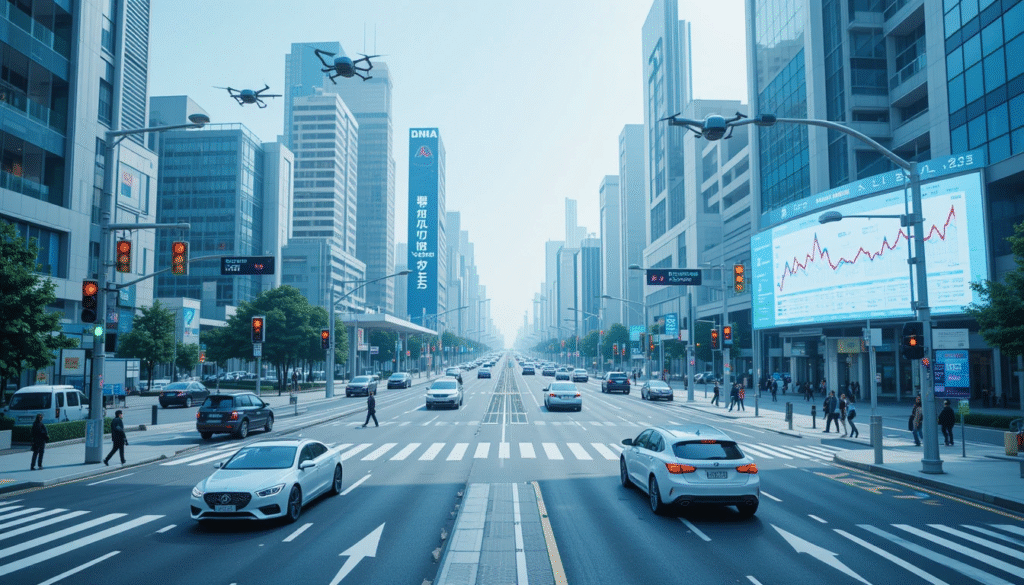
AI driven navigation systems optimize routes dynamically based on live traffic, driver behavior, weather and road conditions. In smart cities, AI networks coordinate traffic signals, predict congestion hotspots and enable vehicle to infrastructure(V2X) communication.
Los Angeles reduced traffic delays by up to 20% using predictive AI traffic management that adjusts signal timings in response to real time sensor feeds and weather forecasts.
Transport for London cut bus travel times by 15% and improved on time performance by 10% through AI powered adaptive signal control that prioritizes public transit.
https://waymo.com/waymo-driver
Bengaluru deployed an AI enabled signal management system that shortens journey times at major intersections by analyzing live traffic flows and adjusting signals accordingly.
5. In Vehicle Voice Assistants

AI powered in vehicle voice assistants like Amazon Alexa Auto and Cerence enable hands free control of many car functions through natural language processing. Drivers can use voice commands to manage music, navigation, messaging and climate control effortlessly, enhancing convenience and safety. These assistants continuously improve by learning user preferences and context offering personalized and intuitive interaction.
In 2024 over 20 million U.S drivers actively used in car voice assistants monthly with voice enabled route planning and infotainment control growing by 30% year by year. Advanced features include noise cancellation for clearer communication and multi seat intelligence for better audio experience. These AI assistants are integral to modern connected cars making driving more seamless and enjoyable.
6. AI for EV Battery Optimization
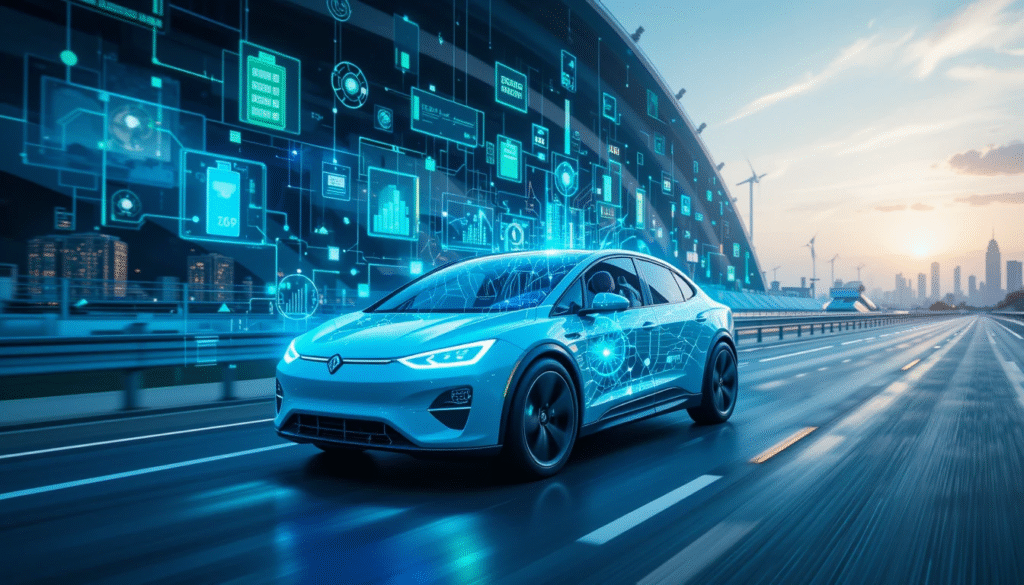
AI maximizes EV efficiency by extending battery life, predicting health, optimizing charging cycles and guiding drivers to nearby charging stations.
Real time AI analytics can boost regenerative braking efficiency by 10–15%, translating directly into extended driving range.
https://www.thedriverlessdigest.com/p/waymo-stats-2025-funding-growth-coverage
Tesla’s Trip Planner uses AI to calculate optimal charging stops, traffic conditions and elevation changes to minimize range anxiety.
https://www.automotivedive.com/news/uber-gm-cruise-autonomous-vehicles-ride-sharing/725409
Integrating AI with quantum computing may push energy density from today’s 250 to 300 Wh/kg to 400 to 500 Wh/kg by 2030 increasing EV range by up to 70% without enlarging battery packs.
https://www.tesla.com/VehicleSafetyReport
Benefits of AI in Vehicle Technology
AI adoption in vehicles yields:
- Enhanced safety through collision avoidance and reduced human error
- Improved efficiency with optimized routing and energy management
- Lower costs via predictive maintenance and minimal unplanned repairs
- Personalized experiences via adaptive infotainment and cabin comfort
- Sustainability through smart traffic decongestion and eco-driving insights
- Lower insurance premiums as AI enabled driving reduces accident risk
Challenges in Implementing AI in Vehicles
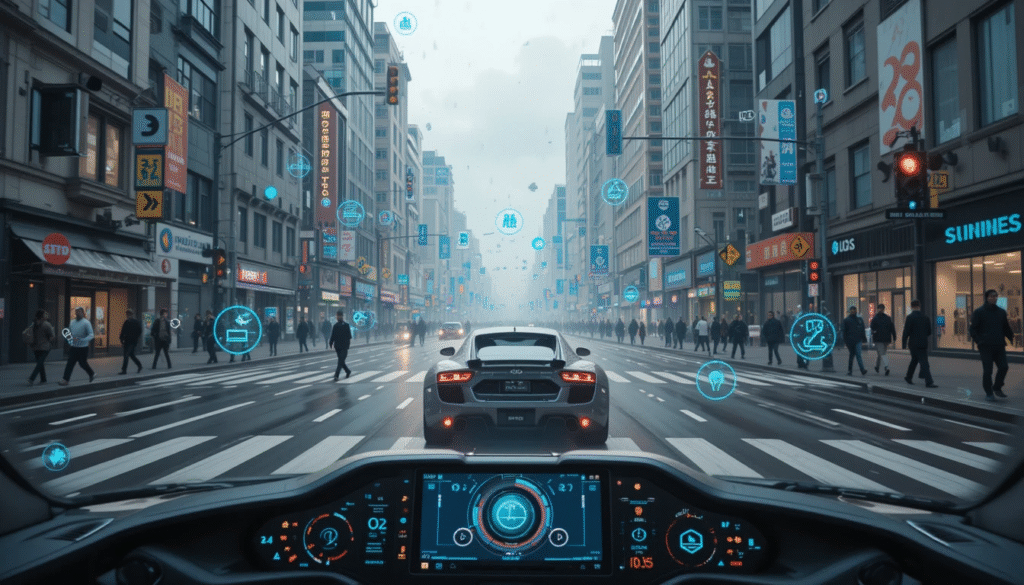
Despite its promise, automotive AI faces hurdles:
- High development and deployment costs for sensors, compute hardware and data infrastructure
- Ethical and legal questions such as liability in unavoidable collisions and AI decision transparency
- Regulatory complexity across jurisdictions slowing global rollout of Level 4–5 autonomy
- Public trust and safety perceptions especially following high profile AV incidents
- Data security and privacy concerns over continuous sensor and voice data collection
Future Trends in AI Vehicle Technology
1. Level 5 Autonomy
Fully self driving cars without steering wheels or pedals will navigate any environment from crowded urban streets to icy mountain passes, without human oversight.
2. Vehicle to Everything(V2X) Communication
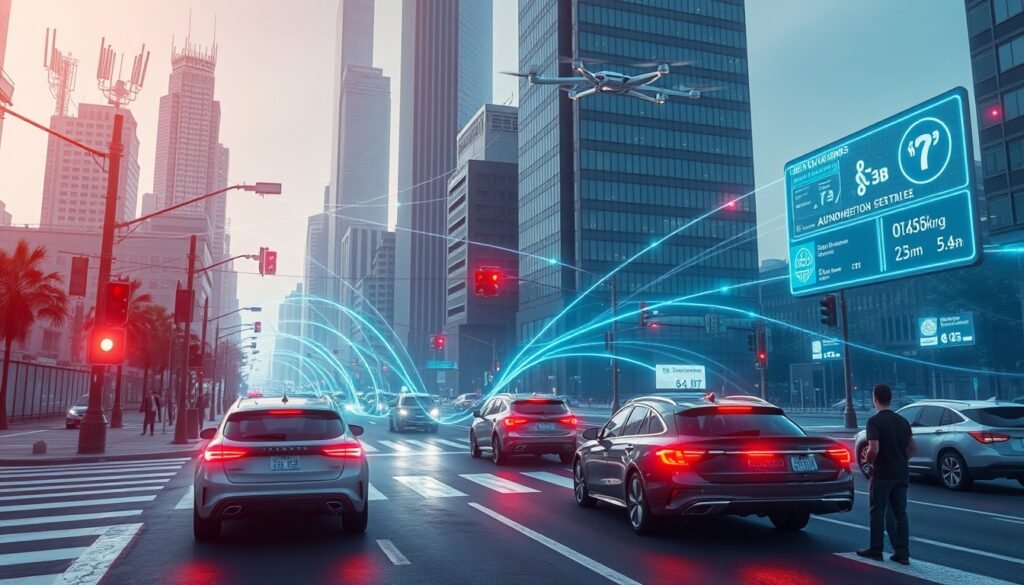
AI powered V2X systems will enable cars to exchange data with infrastructure, pedestrians smartphones, drones and other vehicles creating a cooperative mesh network that optimizes safety and traffic flow.
3. AI + 5G Integration
5G’s low latency and high bandwidth will allow AI systems to process sensor data in near real time crucial for split second decisions in dense traffic or emergency scenarios.
4. Shared Autonomous Fleets
Ride hailing companies like Uber and Lyft will deploy AI driven autonomous fleets, reducing ownership costs, traffic congestion and urban parking demand.
5. Digital Twins for Vehicles
AI will power virtual replicas of physical vehicles enabling engineers to simulate wear, software updates and new features in a risk free digital environment before deploying them on actual cars.
Companies Leading the Future of AI in Vehicle Technology
| Company | Area of Leadership | Notable Project or Capability |
|---|---|---|
| Tesla | Autopilot & FSD | Dojo supercomputer for neural network training https://www.reddit.com/r/teslamotors/comments/1m767d1/in_q2_2025_tesla_recorded_one_crash_for_every_669/ |
| Waymo | Commercial robotaxis | 10 million paid rides; 250,000 rides/week https://www.cnbc.com/2025/04/24/waymo-reports-250000-paid-robotaxi-rides-per-week-in-us.html |
| NVIDIA | AI compute platforms | Drive Orin SoC for Level 4 autonomy |
| Apple | Rumored “Apple Car” | AI-based sensor fusion and design patents |
| Baidu | Intelligent transport | Apollo ecosystem for China’s smart cities |
| Huawei | In-vehicle systems | AI cockpits and 5G V2X integration |
AI’s Role in Sustainable Mobility
AI contributes to decarbonization by:
Enabling smart charging infrastructure that balances grid load
Optimizing routes for lowest emissions
Analyzing driving behavior to encourage eco-driving
Synchronizing traffic lights to reduce idling
Ethical Considerations

As autonomous systems make life and death decisions society must address:
- Moral dilemmas: How should AI prioritize between passenger and pedestrian safety?
- Liability: Who is at fault when an AI driven car crashes the manufacturer, software developer or vehicle owner?
- Bias and fairness: How can AI avoid perpetuating systemic biases such as misidentifying cyclists or pedestrians of certain demographics?
Researchers, legislators and industry stakeholders are actively debating these issues to ensure equitable, transparent and accountable AI in mobility.
The future of AI in vehicle technology promises safer roads, personalized experiences and eco-friendly urban environments. By balancing rapid innovation with robust regulation, ethical frameworks and public engagement, AI will drive the next automotive revolution making self driving cars, intelligent cities and sustainable mobility part of our daily reality.
sources:
- Tesla Vehicle Safety Report (Q2 2025) https://www.tesla.com/VehicleSafetyReport
- CNBC: Waymo reports 250,000 paid robotaxi rides per week https://www.cnbc.com/2025/04/24/waymo-reports-250000-paid-robotaxi-rides-per-week-in-us.html
- Business Wire: Uber and Cruise to Deploy Autonomous Vehicles https://investor.uber.com/news-events/news/press-release-details/2024/Uber-and-Cruise-to-Deploy-Autonomous-Vehicles-on-the-Uber-Platform/default.aspx
- Waymo peer-reviewed safety study, July 2025 https://en.wikipedia.org/wiki/Waymo
- Kortical: Ford predictive maintenance case study https://kortical.com/case-studies/ford-predicting-failures-ai-example/
- BMW Plant Regensburg predictive maintenance https://press.bmwgroup.com/global/article/detail/T0438145EN/smart-maintenance-using-artificial-intelligence?language=en
- LinkedIn: AI in traffic control success stories https://www.linkedin.com/pulse/driving-change-real-world-success-stories-ai-traffic-control-jaiswal-p4qtc
- Transport for London adaptive signal control https://www.xenonstack.com/blog/traffic-management
- AI traffic signals in Bengaluru https://www.irejournals.com/formatedpaper/1705886.pdf
- Voicebot.ai: In-Car Voice Assistant Consumer Adoption https://voicebot.ai/amazon-echo-alexa-stats/
- Journal of Transport & Health: Regenerative braking AI gains https://www.xbytesolutions.com/electric-vehicles-meet-ai-optimizing-battery-performance-and-range/
- Tesla Trip Planner feature white paper https://auto.economictimes.indiatimes.com/news/auto-technology/gms-cruise-to-deploy-its-autonomous-vehicles-on-uber-platform/112727386
- TCS white paper: AI + Quantum for EV batteries https://www.tcs.com/what-we-do/industries/manufacturing/white-paper/ai-quantum-technologies-shaping-future-ev-batteries
Conclusion
The future of AI in vehicle technology is shaping a safer, smarter and more sustainable transportation landscape. AI is driving innovation from self driving cars to smart electric vehicles(EVs) and connected urban infrastructure forming the backbone of the next automotive revolution. This technology enhances vehicle autonomy, optimizes energy efficiency and allows seamless interaction between cars and their environment.
As AI adoption accelerates it is crucial to balance these advancements with thoughtful regulation, ethical considerations and building consumer trust. Together these elements will ensure AI not only transforms mobility but also meets societal expectations for safety and responsibility. The ongoing integration of AI promises to redefine how we travel and interact with vehicles in the years ahead
https://www.ciklum.com/resources/blog/future-of-automotive-ai-2025
FAQ’s
1. What is the future of AI in vehicles?
The future of AI in vehicles includes full automation, predictive maintenance, and enhanced driver safety through real-time data analysis and decision-making.
2. Will AI replace auto mechanics?
AI will automate diagnostics and routine tasks, but skilled auto mechanics will still be needed for complex repairs and system oversight.
3. How is AI being used in vehicles?
AI is used for autonomous driving, driver-assistance systems, predictive maintenance, and in-car personal assistants like voice navigation.
4. How is AI changing the automotive industry?
AI is transforming vehicle design, manufacturing, safety systems, and customer experiences through automation and data-driven insights.
5. What are the disadvantages of AI in cars?
Disadvantages include high costs, cybersecurity risks, ethical concerns, and over-reliance on automation which may reduce driver skills.
6. How did Elon Musk change the automotive industry?
Elon Musk revolutionized the industry with Tesla’s electric cars, AI-based self-driving tech, and by accelerating innovation in sustainable transport.