AI Driven ERP Systems: Future of Nusaker
Nusaker is transforming ERP through modular AI integration, leveraging cloud-native scalability, autonomous agents and industry specific accelerators. It embeds advanced machine learning, generative AI, NLP and computer vision into finance, supply chain, HR and customer engagement.
This integration delivers real-time predictive insights end-to-end automation and AI-driven security enabling organizations to optimize costs, pivot quickly and combat evolving cyber threats. Real-world deployments demonstrate how Nusaker’s phased AI adoption adapts to diverse business needs and budgets mitigating risks associated with sweeping “big bang” implementations
What is Nusaker?
Nusaker is a next-generation cloud-native ERP platform built on a modular microservices architecture that embeds AI capabilities across its core modules, including finance, supply chain, HR and customer experience. This architecture facilitates selective activation of AI functionalities like forecasting, invoice automation, conversational AI and fraud detection allowing seamless scaling as organizational maturity evolves.
For example: a chemical manufacturing company employed Nusaker’s AI forecasting to reduce stock-outs by 30%, cutting emergency procurement costs by 15% through early warning of supply shortages (https://erpsoftwareblog.com/cloud/2025/06/use-case-ai-driven-predictive-analytics-in-erp/). Such capabilities enable organizations to avoid “big-bang” risks and invest incrementally.
Under the hood, Nusaker leverages:
AI-powered security: Employs behavioral analytics to detect anomalies and potential fraud in real time.
Real-time predictive analytics: Continuously trains forecasting models on incoming transactional data to anticipate inventory shortages, demand spikes and cash flow variances.
Automated processing: Uses computer vision and NLP for invoice capture, matching and posting—eliminating manual data entry.
Conversational AI: Provides an embedded chatbot for on demand report generation and self-service guidance across modules.
Nusaker’s AI security module leverages User and Entity Behavior Analytics (UEBA) to detect anomalies by modeling baseline user patterns dynamically. This helps identify fraud or insider threats in real-time a feature inspired by successful UEBA deployments in financial services where early detection curtailed significant breaches (https://gurucul.com/blog/what-is-ueba-and-how-does-it-work/).
Automated processing capabilities utilize computer vision and NLP to handle invoice capture and reconciliation with over 99% accuracy, drastically reducing manual reconciliation efforts by up to 90% (https://www.bitontree.com/case-studies/smart-ai-invoice-processing-system). Additionally a generative AI chatbot embedded within Nusaker’s ecosystem provides on-demand reporting and domain specific guidance enhancing user experience across departments.
Real life Example: A chemical manufacturer integrated Nusaker’s forecasting module and reduced stock out incidents by 30% during peak production by anticipating supply shortages 48 hours in advance cutting emergency procurement costs by 15% (https://erpsoftwareblog.com/cloud/2025/06/use-case-ai-driven-predictive-analytics-in-erp/).
Core Features of Nusaker:
Nusaker offers modular AI integration, enabling organizations to deploy select AI modules such as forecasting, invoice OCR or chatbots in alignment with readiness and budgets. The microservices cloud native architecture leverages Kubernetes and serverless functions for horizontal scalability, zero-downtime updates and seamless integration with leading cloud providers like AWS, Azure and GCP (https://www.redhat.com/en/topics/microservices/what-are-microservices). By decoupling components Nusaker allows organizations to elastically scale resources during peak times such as flash sales or month-end closings without performance degradation.
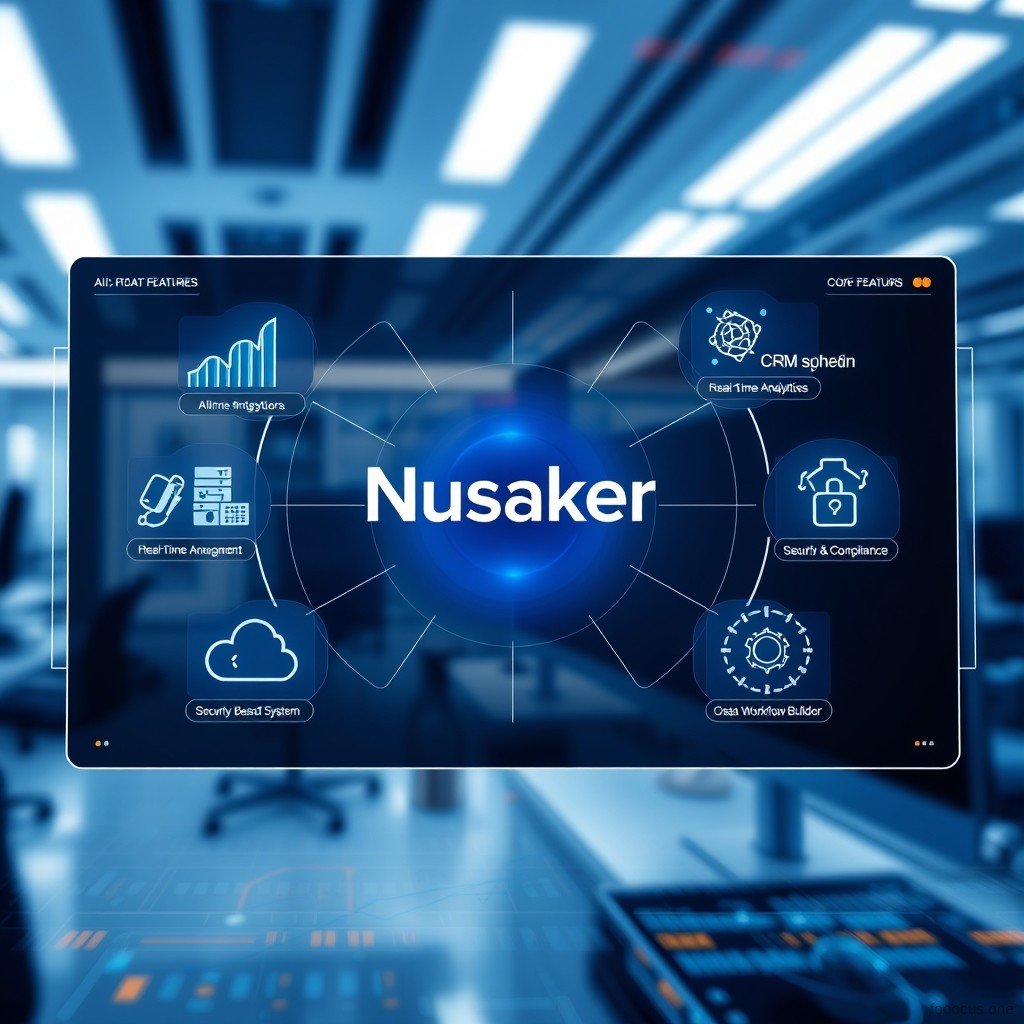
| Feature | Description |
|---|---|
| Modular AI Integration | Phased enablement of forecasting, invoice OCR, chatbot and threat detection modules to match organizational readiness. |
| Cloud-Native, Microservices Architecture | Kubernetes-based services and serverless functions deliver zero-downtime updates, horizontal scalability and seamless integration with AWS, Azure and GCP. |
| Autonomous Agents & Generative AI | Pre-built AI agents perform touchless processes (e.g. intercompany reconciliation)—while custom agents can be trained in-platform for unique workflows. |
| Real-Time Cybersecurity | UEBA-driven threat detection continuously learns behavioral patterns and flags deviations—stopping insider threats and zero-day exploits (https://gurucul.com/blog/what-is-ueba-and-how-does-it-work/). |
| Cross-Industry Adaptability | Pre-trained accelerators for manufacturing predictive maintenance, retail dynamic pricing and healthcare patient throughput—compressing customization time by up to 50% (https://www.bharuwasolutions.com/blog-details/ai-enabled-real-time-analytics-in-erp-leveraging-data-for-better-decision-making). |
Autonomous AI agents within Nusaker handle “touchless” end-to-end processes such as automated intercompany reconciliation and virtual hiring assistants. These agents can be customized and trained internally to adapt to unique workflows, drawing lessons from platforms like UiPath that have pioneered attended and unattended digital workers in enterprise automation.
On security real-time threat detection powered by UEBA continuously models behavioral patterns to flag deviations indicative of insider threats or zero-day exploits (https://www.ibm.com/think/topics/ueba). Furthermore cross-industry adaptors embed pre-trained predictive models such as manufacturing predictive maintenance (e.g. Siemens’s Senseye) and retail dynamic pricing reducing implementation times by up to 50% (https://www.bharuwasolutions.com/blog-details/ai-enabled-real-time-analytics-in-erp-leveraging-data-for-better-decision-making).
The Role of AI in Modern ERP Systems
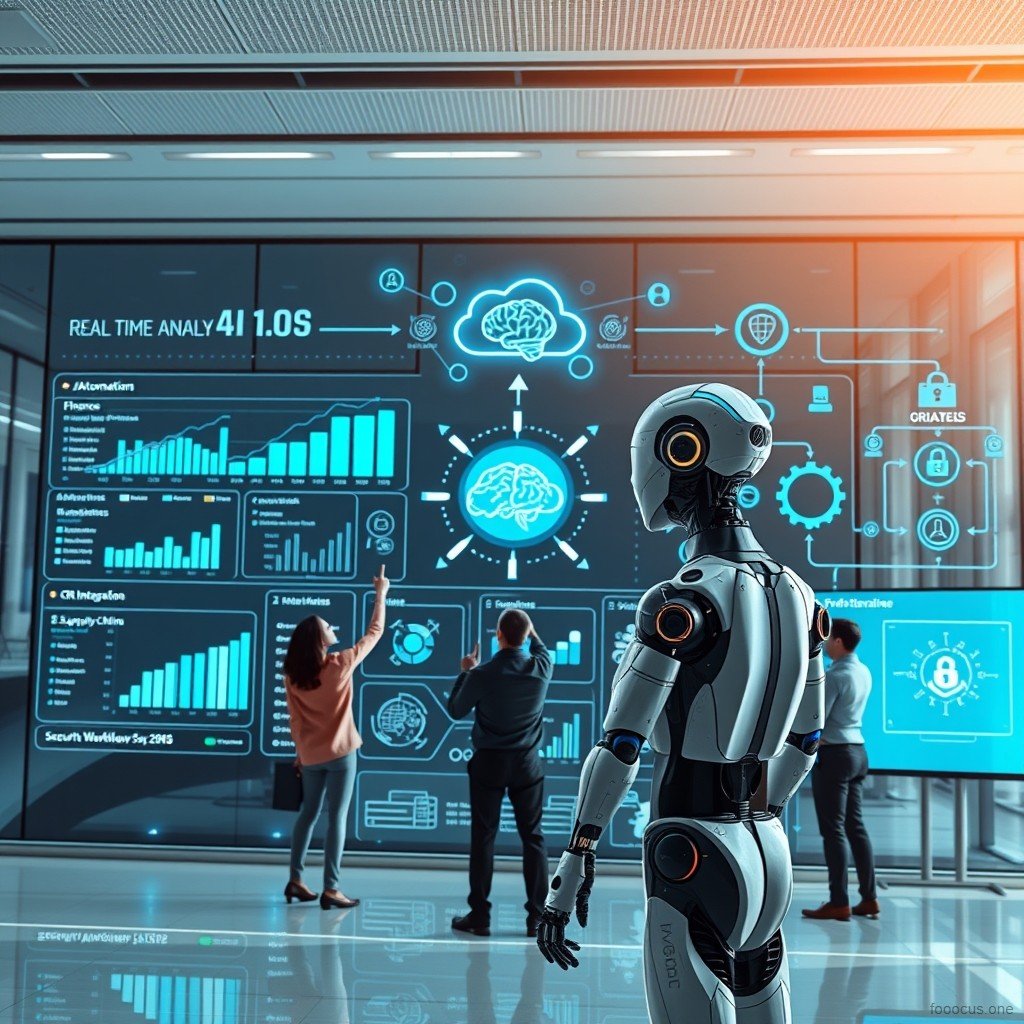
AI-driven ERPs automate repetitive processes like procurement approvals, payroll runs and month-end closings minimizing human errors and freeing teams for strategic priorities. The automation achieved increases operational efficiency notably for instance automation reduced invoice processing times by 70% for various multinational corporations deploying AI OCR technology.
Predictive ERP analytics empower organizations to forecast sales, inventory and cash flow trends accurately enabling proactive decisions. Gartner forecasts that by 2027 only 30% of firms will have fully AI-ready ERP data environments, driving massive investments in data governance frameworks worldwide (https://itbrief.com.au/story/gartner-ai-agents-set-to-automate-half-of-decisions-by-2027).
1. Process Automation
AI-driven ERPs automate tasks such as procurement approvals, payroll runs and month-end closings minimizing human error and freeing teams for strategic initiatives.
2. Predictive ERP Analytics
Machine learning models forecast sales, cash flow and inventory trends; detect anomalies and recommend interventions. Gartner predicts that by 2027 only 30% of organizations will have AI-ready ERP data spurring investments in data quality and governance ( https://itbrief.com.au/story/gartner-ai-agents-set-to-automate-half-of-decisions-by-2027).
3. Intelligent Data Insights
NLP and data mining convert vast ERP datasets into natural-language insights. Users can ask “What will Q4 revenue look like if inventory delays persist?” and receive instant data-backed projections.
4. Enhanced User Experience
Generative AI assistants (e.g. Oracle Fusion Cloud AI Agents) auto-populate entries, summarize large contracts and deliver contextual guidance boosting productivity and adoption.
Real-life example: A mid-sized apparel chain integrated Nusaker’s dynamic pricing accelerator and saw Black Friday gross margins rise by 5% through real-time markdown adjustments based on competitor pricing and demand signals ( https://redresscompliance.com/case-study-macys-use-of-ai-to-enhance-customer-experience-and-operational-efficiency/).
Why Nusaker Leads the Future of ERP
Nusaker’s modular AI integration enables businesses to start small implementing AI-driven OCR for invoice automation or chatbots and scale up to complex workflow orchestration as confidence and ROI grow. This incremental approach minimizes risk compared to monolithic ERP upgrades supporting dynamic business needs. Powered by Kubernetes and serverless compute Nusaker elastically scales resources independently of the data volume optimally serving peak load events such as flash sales or financial closes without latency.
Cybersecurity is enhanced with embedded UEBA which continuously analyzes over 3,000 behavioral models to detect and block insider threats and advanced persistent threats in real-time integrating seamlessly with broader SIEM/XDR solutions to offer unified security monitoring (https://www.ibm.com/think/topics/ueba).
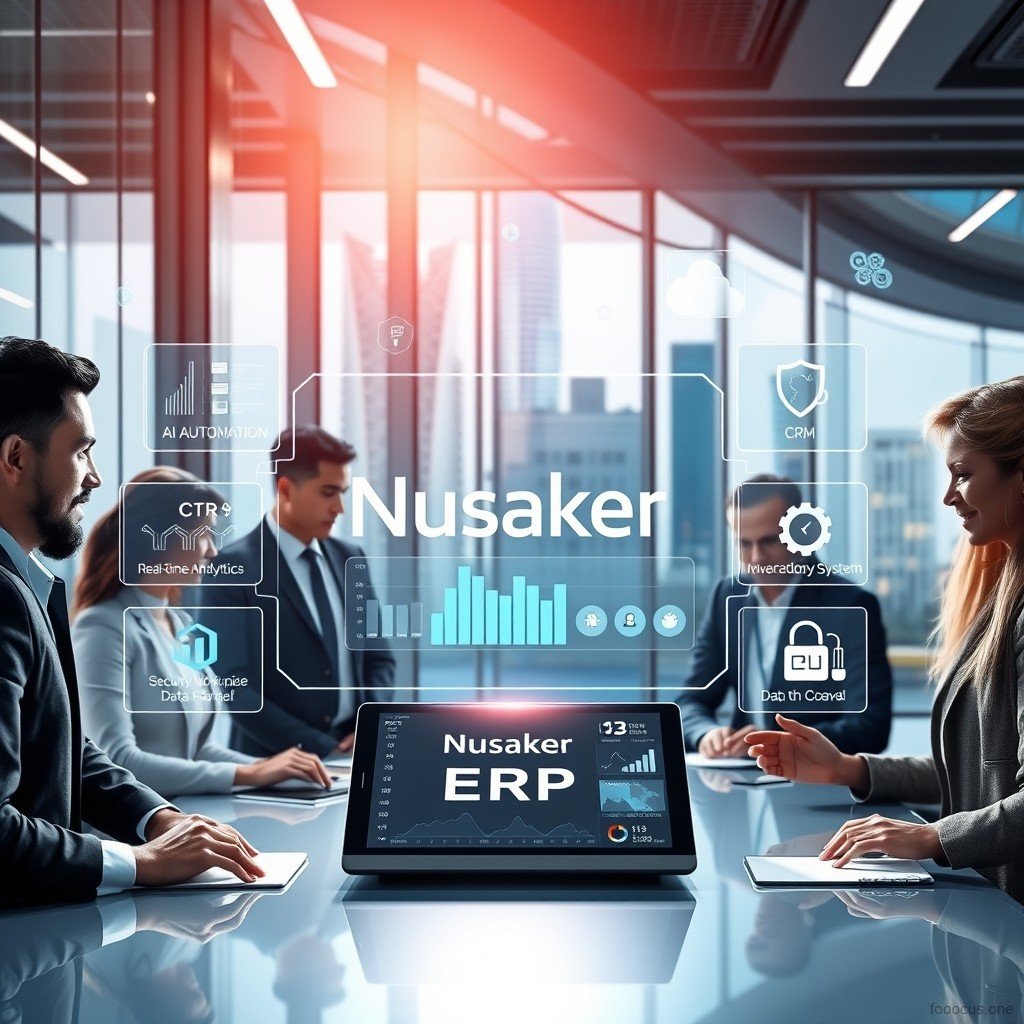
Nusaker’s industry accelerators bring decades of cross-domain AI expertise into specific verticals for example: Siemens’s Senseye platform enables manufacturers to cut maintenance costs by 40% by predictive equipment failure alerts while Macy’s utilizes dynamic pricing models that optimize markdowns in real-time enhancing gross margins (https://www.businessinsider.com/ai-siemens-predict-industrial-maintenance-machine-infrastructure-equipment-costs-productivity-2024-11). Nusaker’s pre-trained AI models drastically reduce customization timelines and expedite ROI realization across sectors.
A. Custom AI Integration
Start with lightweight AI functions such as invoice OCR and scale to full predictive supply-chain orchestration when ready.
B. Scalability & Cloud-Native Design
Elastic compute via Kubernetes pods and serverless Lambdas adapts to flash sales and month-end closings without performance degradation.
C. AI-Enhanced Cybersecurity
UEBA algorithms analyze over 3,000 behavioral models to detect insider threats and advanced persistent threats (APTs), integrating seamlessly with SIEM/XDR suites (https://www.ibm.com/think/topics/ueba).
D. Cross-Industry Accelerators
From Siemens-style predictive maintenance where Senseye users cut maintenance costs by 40% and increased staff productivity by 55% ( https://www.businessinsider.com/ai-siemens-predict-industrial-maintenance-machine-infrastructure-equipment-costs-productivity-2024-11)—to retail dynamic pricing at Macy’s Nusaker’s accelerators slash time-to-value and expedite ROI.
Real Business Use Cases:
| Industry | Use Case | Impact |
|---|---|---|
| Retail | Smart Inventory & Dynamic Pricing | A mid-sized apparel chain experienced a 30% drop in stock-outs and 5% gross margin uplift during Black Friday via ML-powered forecasting and real-time pricing (https://redresscompliance.com/case-study-macys-use-of-ai-to-enhance-customer-experience-and-operational-efficiency/). |
| Finance | Automated Reconciliation & Risk Modeling | A regional bank reduced end-of-day closing from 4 hours to 30 minutes and cut fraud false positives by 40% using AI-driven reconciliation—achieving a 45% cost reduction in reconciliation workflows (https://www.anaptyss.com/blog/how-generative-ai-redefining-financial-reconciliation-banks/). |
| HR | NLP Chatbots & Sentiment Analysis | A national staffing firm cut recruiter workload by 25%, while sentiment dashboards flagged attrition risks—enabling proactive retention interventions. |
| Logistics | Route Optimization & Predictive Delivery | A 3PL provider saved 12% in fuel costs by dynamically rerouting based on traffic and weather predictions via AI-driven telematics integration. |
1 Retail: Smart Inventory & Dynamic Pricing
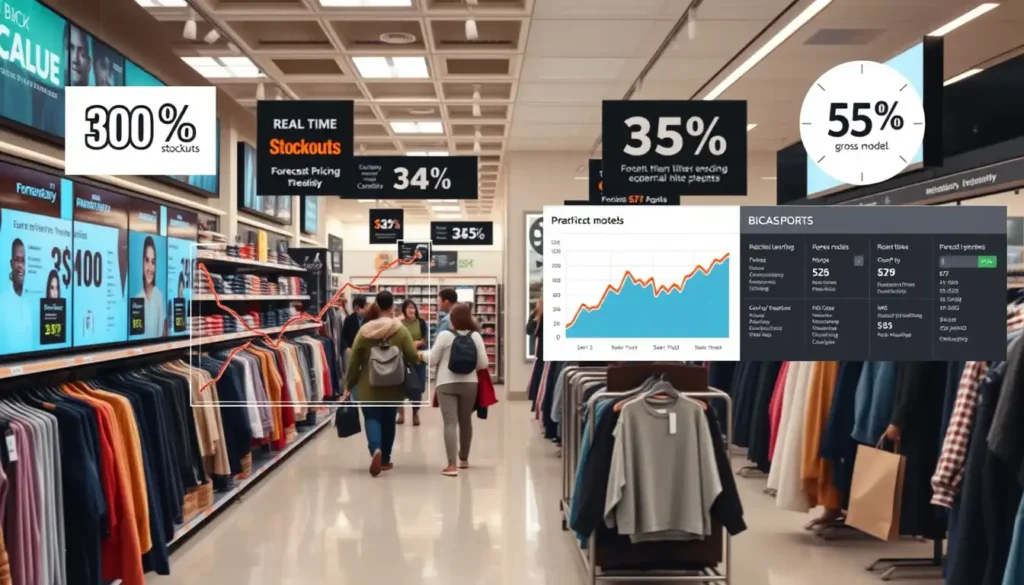
A mid-sized apparel chain implemented Nusaker’s ML-powered forecasting and saw stock out incidents drop by 30%. During Black Friday dynamic pricing algorithms adjusted markdowns in real-time boosting gross margins by 5%.
2 Finance: Automated Compliance & Risk Modeling
A regional bank adopted Nusaker’s AI-driven reconciliation and anomaly detection. End-of-day balance sheet closing time shrank from 4 hours to under 30 minutes, and false positives in fraud alerts fell by 40%.
3 HR: NLP Chatbots & Sentiment Analysis
A national staffing firm uses Nusaker’s embedded NLP chatbot for candidate screening and employee self-service reducing recruiter workload by 25%. Sentiment-analysis dashboards flagged attrition risks enabling preemptive retention efforts.
4 Logistics: Route Optimization & Predictive Delivery
A third-party logistics provider integrated Nusaker’s route-planning AI saving 12% in fuel costs by dynamically rerouting based on traffic and weather predictions.
Implementation Strategy for AI ERP
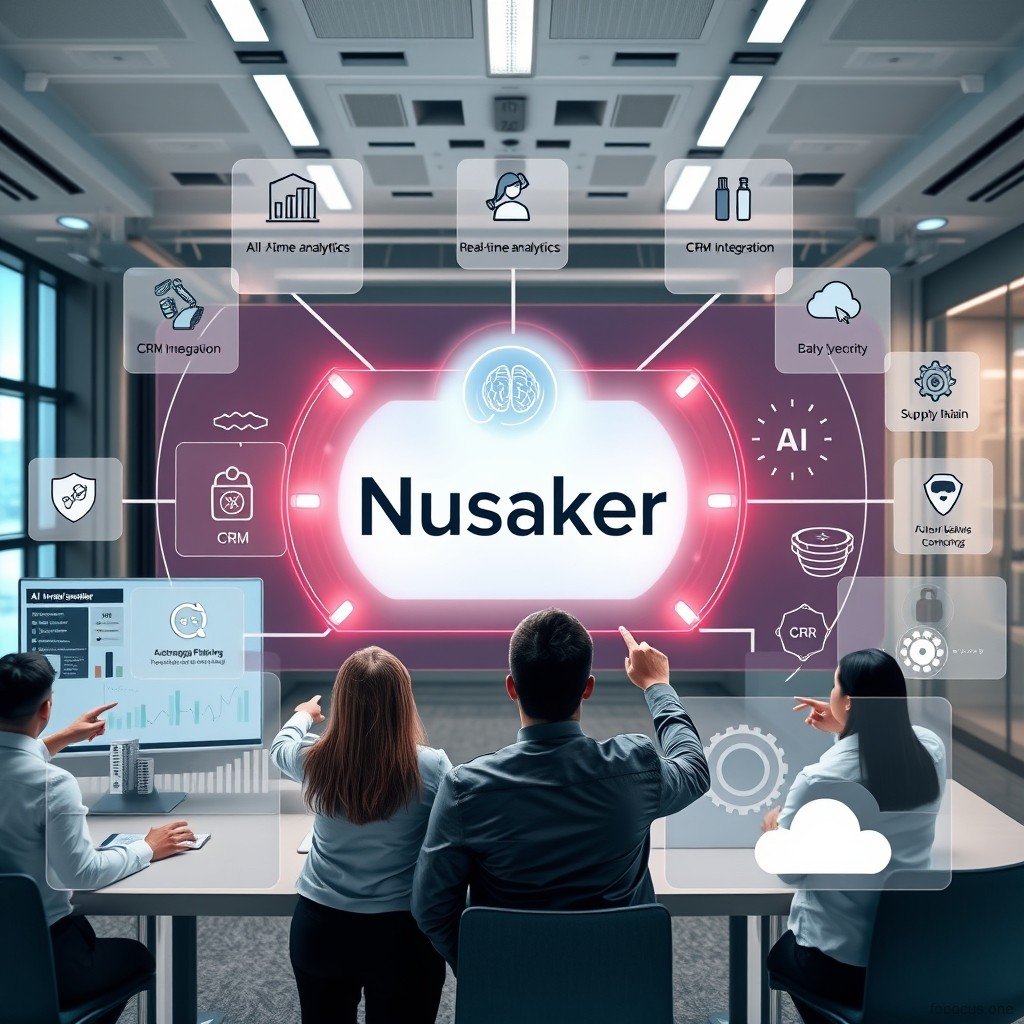
- Assess Needs: Identify pain points where AI-driven ERP can bring the most value.
- Choose Scalable Modules: Start small with AI features like invoice automation or chatbot integration.
- Train Staff: Ensure internal teams understand AI functions and can interpret analytics.
- Monitor & Optimize: Use dashboards to continuously improve based on AI-generated insights.
Conclusion
AI-driven ERP platforms such as Nusaker represent a landmark shift in enterprise resource planning, integrating automation, predictive insights and intelligent workflows within a cloud native microservices environment. By enabling modular AI adoption, elastic scalability and sophisticated cybersecurity, Nusaker empowers organizations to accelerate efficiency, safeguard operations and future-proof growth. Industry-specific accelerators and autonomous agents further differentiate Nusaker as a leader in the evolving ERP landscape. As AI adoption across ERP continues to accelerate, platforms like Nusaker set the benchmark for intelligent, adaptable enterprise management systems
FAQ’s
1. What is the future of ERP with AI?
AI will automate routine ERP tasks, enhance data-driven decision-making, and improve predictive analytics.
It will enable smarter, real-time business operations with minimal manual intervention.
2. What is the future of ERP systems?
ERP systems will become cloud-native, AI-powered, and highly customizable.
They will focus on agility, scalability, and real-time intelligence across business functions.
3. What is the best AI for ERP?
AI models like IBM Watson, Microsoft Azure AI, and SAP Leonardo lead in ERP integration.
They offer robust automation, machine learning, and data analytics capabilities.
4. What are the ERP trends for 2025?
Key trends include AI-driven automation, hyper-personalization, and low-code platforms.
Cloud ERP adoption and real-time analytics will dominate business priorities.
5. What are the ERP trends for 2026?
Expect growth in autonomous ERP, embedded generative AI, and blockchain-based security.
Voice-activated systems and IoT integration will enhance process efficiency.
6. What are the new trends in ERP systems?
Modern ERP systems emphasize cloud computing, AI integration, and mobile-first access.
They now support predictive insights, agile modules, and seamless third-party connectivity.