Artificial Intelligence the Future of Teaching
Artificial intelligence is revolutionizing education by creating personalized, adaptive and inclusive learning experiences for students. AI powered tools like intelligent tutoring systems tailor instruction to individual needs helping learners progress at their own pace. Predictive analytics allow educators to identify students who may need additional support enhancing intervention strategies and improving outcomes.
Accessibility technologies powered by AI ensure that diverse learners including those with disabilities have equitable access to education. Schools and institutions that adopt these AI driven innovations can optimize resources, streamline administrative tasks and foster lifelong learning habits. By integrating artificial intelligence education is becoming more effective engaging and inclusive for all students. This transformation holds great promise for shaping the future of teaching and learning worldwide.
What Is Artificial Intelligence in Education?
Artificial intelligence in education(AIED) refers to the use of technologies like machine learning, natural language processing and data analytics to enhance teaching and learning. AIED automates routine tasks such as grading assignments and generating educational content saving educators valuable time. It personalizes instruction by analyzing student interactions and providing tailored feedback to support individual learning needs.
Examples include chatbots that answer student questions instantly and AI powered platforms that design customized curricula. These technologies aim to improve learning efficiency, student engagement and equity in the classroom. By adapting to each learner’s pace and style AI helps create more inclusive and effective educational experiences. Overall AIED is transforming education by making it smarter and more responsive to both students and teachers.
How AI Is Transforming Teaching
1. Personalized Learning Paths
By leveraging learner data quiz results, engagement metrics and study habits AI platforms create dynamic learning paths that adapt as students progress. Squirrel AI decomposes subjects into nanoscale knowledge points and continuously refines each learner’s roadmap closing gaps with pinpoint precision. https://en.wikipedia.org/wiki/Squirrel_AI
2. Smart Content Creation
Large language models(LLMs) enable rapid generation of study guides, quizzes and interactive modules. Duolingo’s Birdbrain and GPT4 powered Duolingo Max generate lessons and Roleplay scenarios on demand allowing content experts to focus on pedagogical design rather than manual authorship. https://blog.duolingo.com/large-language-model-duolingo-lessons/
3. Automated Grading and Feedback
AI grading systems evaluate multiple choice items, code challenges and essays at scale. Tools such as Gradescope employ machine learning to provide near instantaneous unbiased feedback significantly reducing instructor workload and accelerating the feedback loop.
4. Intelligent Tutoring Systems
Virtual tutors powered by AI deliver on demand one on one assistance. Carnegie Learning’s MATHia platform combines cognitive science and AI to guide students through problem sets offering hints and scaffolding when errors occur.
5. Teacher Support Tools
AI aids educators in curriculum planning and classroom management. Platforms like Knewton analyze class wide performance to recommend targeted interventions while virtual assistants schedule meetings and track professional development needs.
The Role of AI in Enhancing Student Learning
Predictive Analytics
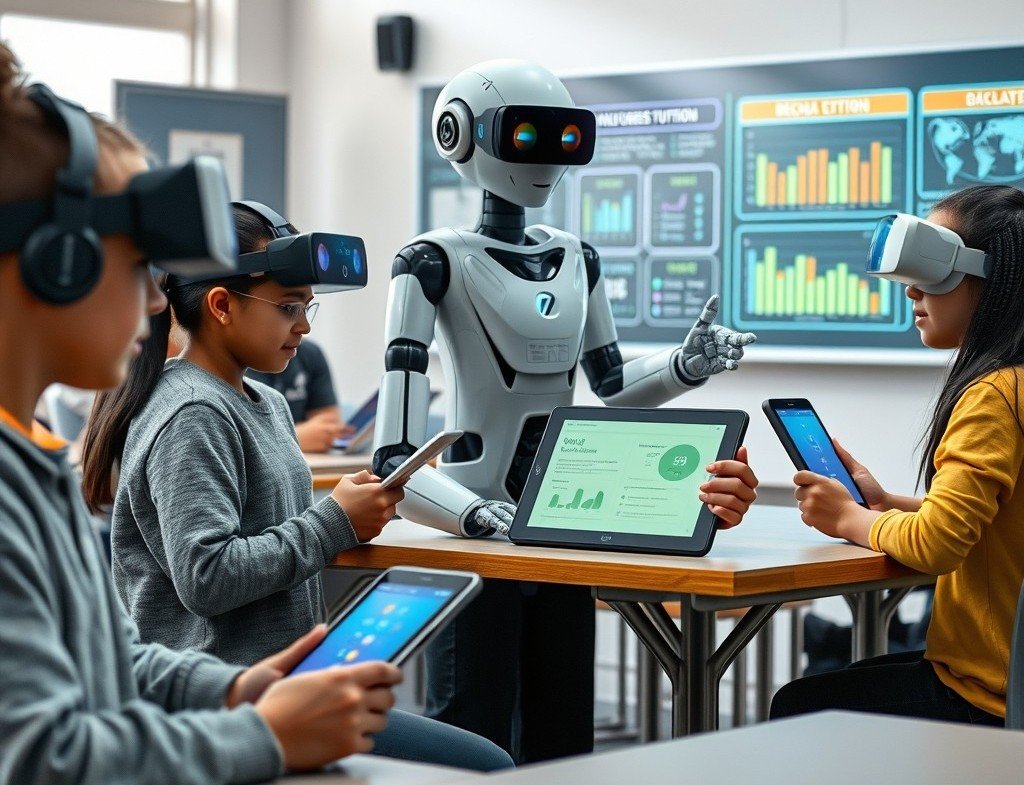
By applying statistical models and machine learning to historical performance data AI systems identify students at risk of falling behind and trigger timely interventions. Georgia State University’s predictive analytics initiative which monitors over 800 risk factors boosted graduation rates by 22%.
https://mrccedtech.com/how-ai-revolutionizes-higher-education-with-predictive-analytics/
Real Time Translation and Language Support
AI driven translation tools break down linguistic barriers in multilingual classrooms. Microsoft Translator for Education provides live captioning and translation across 100+ languages fostering inclusivity for ESL learners and families. https://www.microsoft.com/en-us/translator/education/
Accessibility for Differently Abled Learners
AI enhances accessibility through speech to text, text to speech and computer vision tools. Assistive technologies such as Wordly’s live translation and Alrite’s transcription services generate real time captions and convert lectures into searchable text empowering students with hearing or visual impairments. https://www.wordly.ai/education-translation
https://alrite.io/ai/alrite-automatic-transcription-for-students-lecturers
Benefits of Artificial Intelligence in Education
| Benefit | Description |
|---|---|
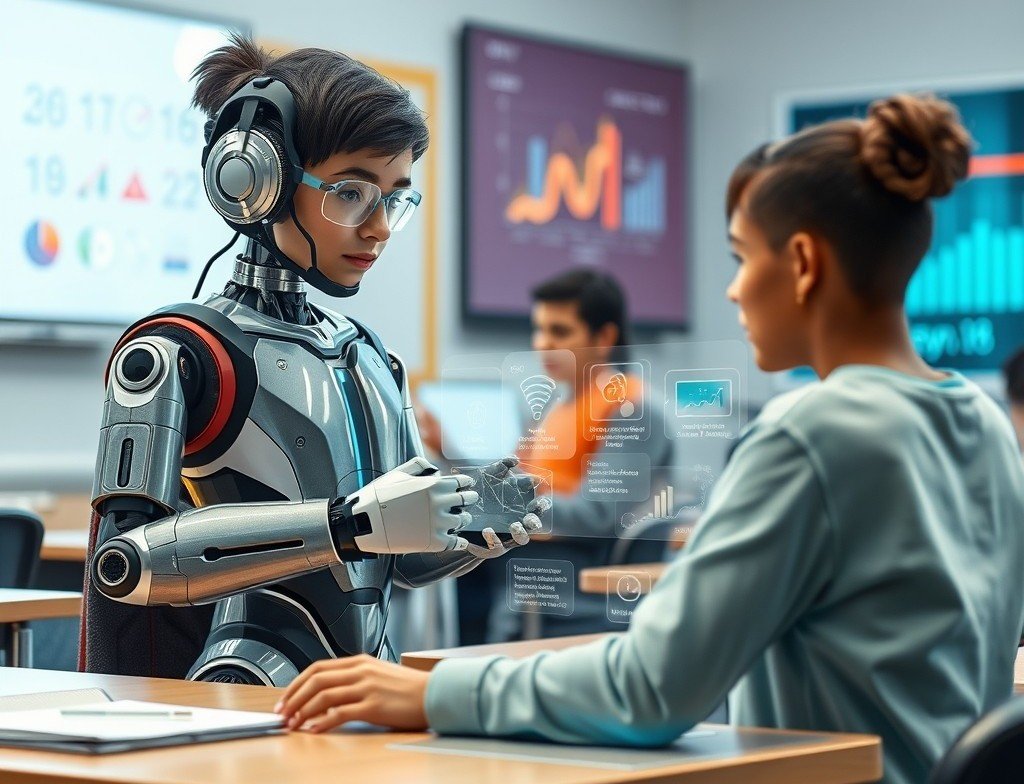
| Efficiency | Automates grading and administrative tasks, freeing educators for high-impact activities. |
| Engagement | Interactive, AI-generated content captivates learners and sustains motivation. |
| Accuracy | Data-driven insights inform targeted teaching strategies and improve learning outcomes. |
| Customization | Adaptive systems tailor content to individual preferences and skill levels. |
| Accessibility | AI-powered assistive tools enable inclusive education for diverse learners. |
Challenges of AI in Teaching and Learning
Data Privacy
Collecting and analyzing student data raises concerns about consent, security and ethical use. Institutions must implement robust data governance policies to protect sensitive information.
Cost of Implementation
Deploying AI systems involves investment in technology infrastructure and staff training. Equitable funding models are needed to prevent a digital divide between well resourced and underfunded schools.
Training Gap
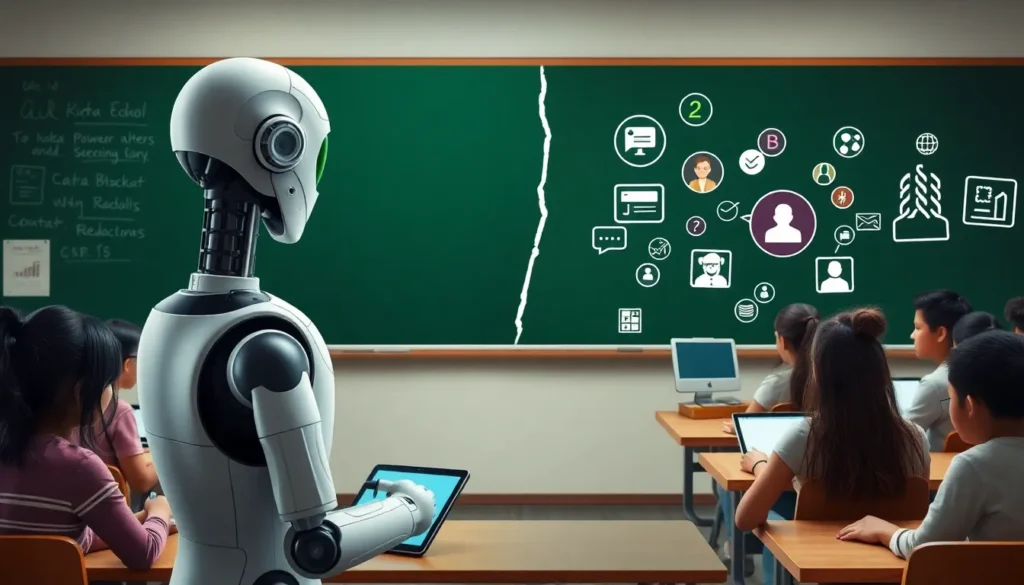
Educators require professional development to integrate AI tools effectively. Ongoing support and user friendly interfaces are critical for teacher adoption.
Equity Concerns
Not all students have equal access to devices and high speed internet. Policymakers and schools must address hardware and connectivity disparities.
Over Reliance on Technology
Excessive dependence on AI can undermine critical thinking and human interaction. Balanced pedagogical approaches should combine AI efficiencies with human mentorship.
Real World Examples of AI in Education
- Duolingo: Uses GPT4 to power features like Explain My Answer and Roleplay offering personalized language practice via video chats with AI avatars.
- Squirrel AI (China): Delivers adaptive learning through its Intelligent Adaptive Learning System (IALS) mapping over 10,000 micro concepts in math and providing real time feedback.
- Knewton: Offers real time recommendations by analyzing student performance data to guide study strategies.
- Carnegie Learning: Combines AI with cognitive tutors in MATHia boosting middle school math proficiency through adaptive scaffolding.
- Quizlet: Employs machine learning to curate flashcards and practice tests optimizing review sessions based on spaced repetition.
Future Trends in AI and Education

The future of AI in education is marked by transformative trends that personalize and enhance learning experiences. AI driven personalized learning paths adapt to individual students needs enabling progress at their own pace. Intelligent tutoring systems provide real time feedback and tailored support improving engagement and understanding. Generative AI will revolutionize content creation making curricula more dynamic and customized.
https://www.sandipuniversity.edu.in/blog/how-ai-is-revolutionising-education-key-trends-for-2025/
https://springsapps.com/knowledge/main-ai-trends-in-education-2024
AI powered analytics predict student challenges early allowing timely interventions to boost success rates. Voice and speech recognition enhance accessibility for diverse learners including those with disabilities. Additionally AI chatbots will offer 24/7 academic and administrative support easing the educational process. Overall these advancements promise a smarter, more inclusive, and efficient education system tailored for future challenges. https://www.eimt.edu.eu/top-10-ai-trends-reshaping-the-future-of-education
AI Powered Classrooms
AI powered classrooms represent a transformative leap in education delivery by integrating intelligent technologies that create personalized, adaptive and engaging learning environments. These classrooms use AI driven platforms to continuously analyze each student’s learning pace, strengths and challenges enabling customized lesson plans that meet individual needs. Virtual tutors and AI assistants provide 24/7 support, answering questions, offering practice exercises and giving instant feedback which helps maintain student motivation and progress.
https://onlinedegrees.sandiego.edu/artificial-intelligence-education
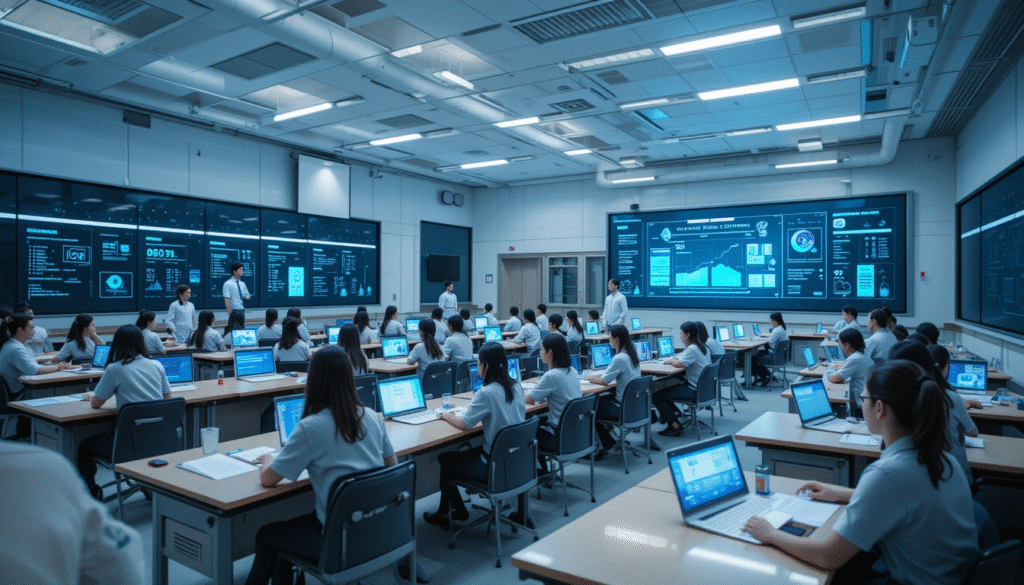
Smart sensors and real time analytics monitor class performance and environmental factors like lighting and student attention allowing adjustments for optimal learning conditions. Immersive technologies such as AI combined with augmented and virtual reality offer interactive simulations that deepen understanding through experiential learning. AI also streamlines administrative tasks freeing teachers to focus more on mentoring and creative instruction. By blending human guidance with advanced AI tools, classrooms become more inclusive, effective and engaging preparing students for a future where technology and education work hand in hand
https://digitaldefynd.com/IQ/ai-in-schools-case-studies
https://www.linkedin.com/pulse/ai-powered-classrooms-educations-future-teachers-matt-hutson-5i17c
Smart sensors and cameras will monitor environmental factors lighting, acoustics and student attention automatically adjusting settings and alerting teachers to signs of disengagement.
Immersive Learning with AI + AR/VR
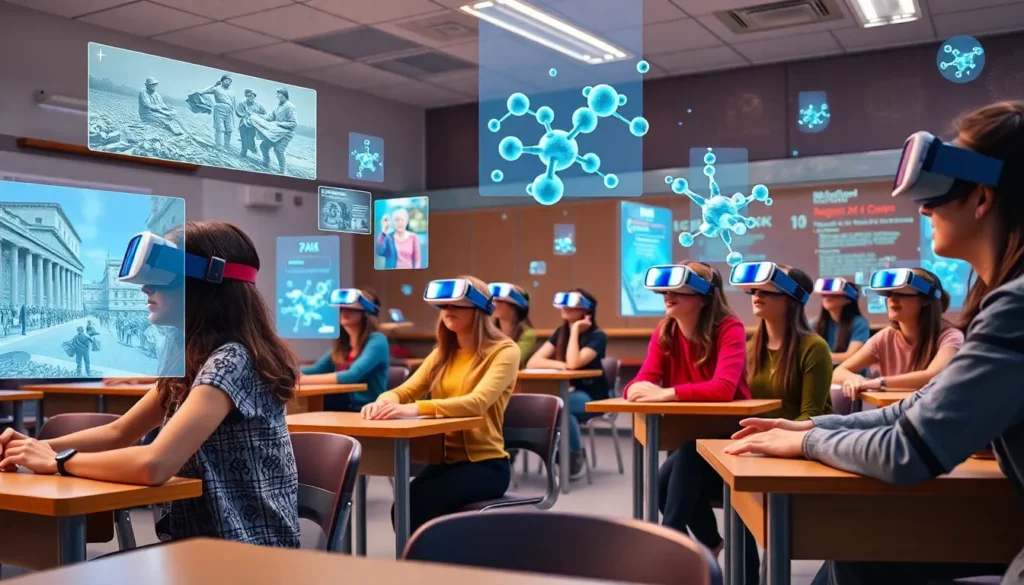
Combining AI with augmented and virtual reality will create realistic simulations for medical, engineering and science education allowing hands on practice in safe controlled environments.
Blockchain + AI in Credentialing
Secure automated credentialing systems will utilize blockchain and AI to verify student achievements, streamline transcript management and combat diploma fraud.
AI in Exam Proctoring
AI based proctoring tools employ facial recognition and behavior analysis to uphold academic integrity in online assessments detecting anomalies while respecting privacy.
The Future Role of Teachers with AI
The future role of teachers in an AI enhanced educational landscape is set to be more dynamic and student centered. Rather than being replaced educators will act as facilitators guiding students through personalized learning journeys created with the help of AI driven insights. Teachers will focus on coaching students in critical thinking, creativity and emotional intelligence providing support that technology cannot replicate.
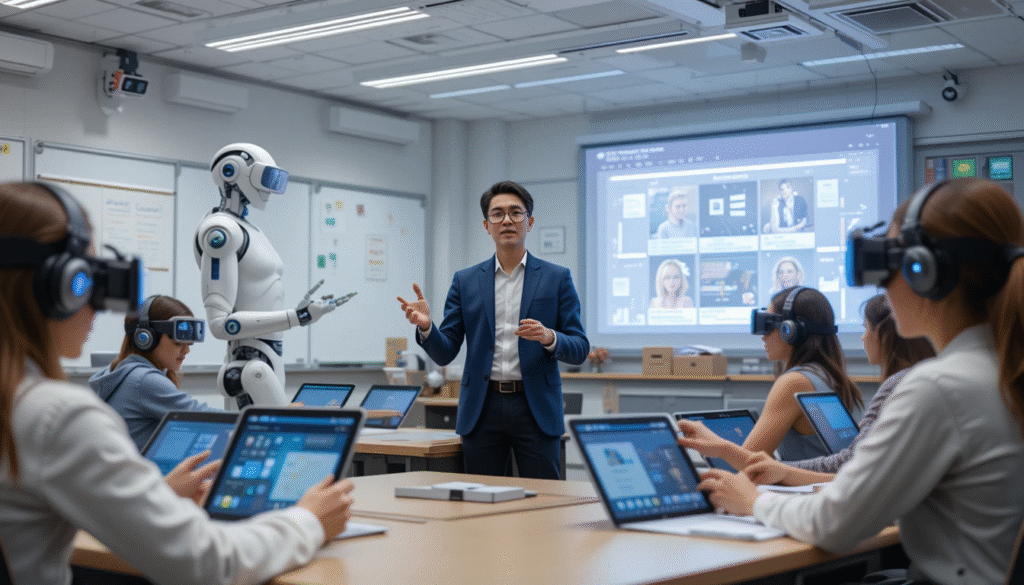
They will interpret data generated by AI platforms to design targeted interventions, adapt curricula and foster collaborative learning environments. Additionally teachers will mentor students in developing digital literacy skills and responsible AI use. By blending traditional teaching wisdom with advanced technology educators will ensure that the human element of empathy and inspiration remains central to education, even as classrooms become more adaptive and intelligent.
Teachers will evolve into:
- Learning coaches
- Data interpreters
- Emotional intelligence mentors
- Curriculum designers
AI will not replace teachers, but enhance their roles by taking over administrative tasks providing deeper insights into student progress and allowing more time for emotional and creative engagement.
Conclusion
The integration of human expertise with artificial intelligence marks a transformative new chapter in education defined by enhanced personalization, greater accessibility and increased scalability. AI technologies are designed to support but not replace teachers by handling time consuming administrative tasks allowing educators to devote more energy to meaningful instruction and student engagement. While AI excels at data analysis and automating routine processes it cannot replicate the compassion, creativity and inspiration that human teachers bring to the classroom.
This collaboration between educators and AI tools creates more adaptive and inclusive learning environments where every students unique needs are addressed effectively. As education evolves, teachers will increasingly act as mentors, coaches and facilitators using AI generated insights to tailor learning experiences. Together this partnership ensures students receive the comprehensive support needed to succeed and adapt in a rapidly changing world.
Ultimately the future of teaching depends on preserving the irreplaceable human connection, empowered by the efficiencies and innovations provided by artificial intelligence.
FAQ’s
1. What is the future of artificial intelligence in teaching and learning?
AI will personalize education, automate assessments, and provide real-time feedback, making learning more efficient and adaptive.
It will support teachers by handling routine tasks and enabling data-driven decisions.
2. Will AI replace teachers in the future?
AI won’t replace teachers but will assist them by enhancing lesson delivery and classroom management.
Human empathy, critical thinking, and mentorship remain irreplaceable in education.
3. How is artificial intelligence used in teaching and learning?
AI powers intelligent tutoring systems, automated grading, and personalized content recommendations.
It also supports language translation, accessibility, and learning analytics.
4. How is artificial intelligence changing teaching?
AI automates repetitive tasks, enabling teachers to focus more on student engagement and creativity.
It offers insights into student performance for tailored instruction.
5. How is AI shaping the future of education and learning?
AI is transforming education into a more customized, inclusive, and flexible experience.
It promotes lifelong learning through adaptive and on-demand resources.
6. Should teachers use AI to write lesson plans?
Yes, AI can help generate lesson structures, activities, and assessments quickly and efficiently.
However, teachers should refine AI-generated content to suit student needs and standards.